
Domestic Patent Registration
Patent registration at Sarv is carried out by experienced and specialized professionals. By registering their inventions, inventors can protect them against unauthorized copying. Patent registration is based on three key criteria: inventive step, novelty, and industrial applicability, which are considered by the relevant authorities when determining patentability. It is important to note that a granted patent provides exclusive rights to the inventor or their legal representative within the jurisdiction where protection is granted. Official patent registration requires specific conditions and documentation that the inventor or their legal representative must fulfill.
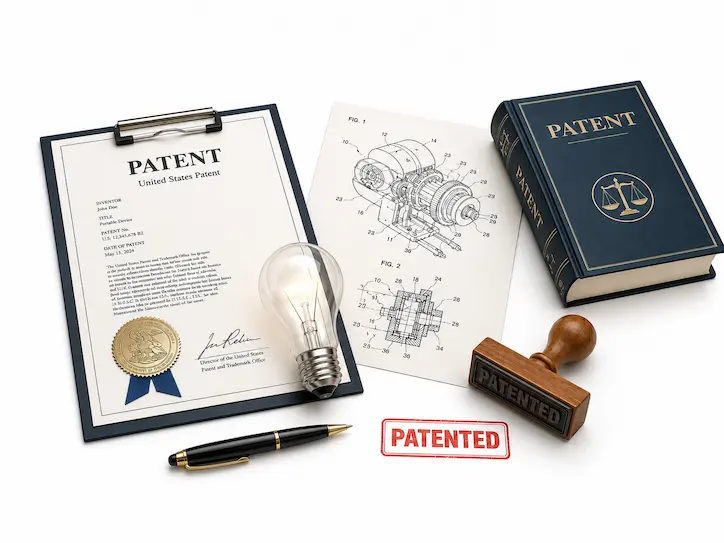

What Is Patent Registration?
Patent registration is a legal process that an inventor or idea owner must complete to protect an invention from unauthorized copying. Through this process, the invention is officially registered in the name of the inventor or rightful owner. The inventor submits the invention, along with the required documents and supporting evidence, to the relevant authorities. After reviewing and approving the invention, the authorities grant the inventor exclusive rights for a specified period. Official patent registration provides legal protection for inventions and creates a strong incentive for innovation and technological development.
Benefits of Patent Registration
The benefits of patent registration are attractive to individuals and companies alike. Officially registering an invention provides you with a valid patent certificate that serves as legal evidence of protection for your invention. This legally recognized document can be particularly useful in various legal matters, such as patent invalidation proceedings. Overall, patent registration offers numerous advantages in the business world. Some of the key benefits of legal patent registration include:
Creating Exclusive Legal Rights for Exploitation
Once you register your invention, you obtain exclusive rights, typically for up to 20 years, to manufacture, use, sell, offer for sale, or import the patented product or process. This legal exclusivity allows you to develop your idea and establish a share of the market without worrying about competitors copying your invention. It also means that any unauthorized use of your invention may be subject to legal action, creating a strong deterrent against infringement. Therefore, a patent certificate serves as official evidence of your intellectual property rights and can help strengthen your position in the market.
Commercialization and Strong Market Entry
Officially registering an invention can pave the way for turning an idea into a commercial product. With legal protection in place, you can focus more confidently on mass production, marketing, and customer acquisition. As a result, investors and businesses may view your product as a more secure investment opportunity. Once your invention is patented, the resulting exclusivity can also create opportunities for competitive pricing and higher profits, as competitors generally cannot offer a patented product or use the patented process without authorization.
Easier Investor Attraction and Financing
Having legally registered patent rights can increase the value of a startup or company. Investors and businesses are generally more interested in projects backed by strong legal protection. A patent can also play an important role in investment negotiations, obtaining bank loans, and securing funding from research and development funds. Therefore, a registered patent can be considered a valuable and assessable asset that strengthens your financial credibility and negotiating position.
Generating Revenue Through Licensing and Assignment
One of the key benefits of patent registration is that the inventor or patent owner can grant others the right to use the invention through a licensing agreement in exchange for royalties. The patent owner may also sell the invention outright or enter into a partnership with others for its production. These options allow you, as the patent owner, to generate income from your invention without directly participating in the production process. In other words, the flexibility to license or transfer patent rights creates diverse opportunities for generating revenue and maximizing the commercial value of the invention.
Enhancing Brand Value and Professional Credibility
Another benefit of patent registration is the enhancement of brand value and professional credibility. Official patent registration demonstrates an individual’s or company’s innovation and technical capabilities. Having a patent certificate can strengthen your scientific and professional credentials when included in your résumé or business profiles. As a result, it can help attract major clients and encourage individuals or companies to collaborate with you on industrial agreements and even international projects. Therefore, patent registration is not only a legal tool but also an effective way to strengthen your technological position and reputation in the market.
Access to Support for Talents and Knowledge-Based Companies
Having a registered patent can, in many countries, serve as a criterion for accessing government support programs and joining support organizations such as the National Elites Foundation. In addition, official patent registration can contribute to the establishment and qualification of a knowledge-based company. This can provide access to various benefits, including financial incentives, research opportunities, and specialized support for technology development. By pursuing the patent registration process, you can help accelerate the growth and development of technology-driven businesses.
Broader Academic and Educational Opportunities
Official patent registration can significantly strengthen your academic résumé. It can also be presented as evidence of innovation when applying to many reputable universities and academic institutions in Iran and abroad. A
Transferability to Heirs and Long-Term Protection of Rights
As mentioned, the rights arising from a registered patent are transferable. In the event of the patent owner’s death, their heirs may legally inherit the rights and benefits associated with the patent. In other words, a patent is considered a durable and inheritable asset, and its ownership can also be officially transferred to other parties. This demonstrates that patent registration is not merely an individual achievement but also a long-term, transferable, and strategically valuable asset.
Legal Action Against Infringers
The patent owner can take legal action through the courts in the event of imitation, counterfeiting, or unauthorized use of the invention by relying on the patent certificate. This legal protection helps prevent unfair competition. Without official patent registration, proving ownership can be considerably more difficult. An official patent serves as evidence that your rights have been legally recognized and can also provide grounds for seeking compensation for damages.
Encouraging Continuous Innovation
Legal protection for inventions encourages inventors and companies to invest more in research and development. When you know that the results of your intellectual efforts are legally protected, you are more confident in pursuing new ideas. Therefore, patent registration not only protects innovation but also promotes a culture of creativity and fair competition, helping create the conditions for sustainable progress.
Consultation with Us

Patent Registration Requirements
When determining which inventions are eligible for patent registration, reference should be made to Article 2 of the Iranian Patent and Industrial Design Registration Law. Under this provision, an invention is patentable if it involves an inventive step and has industrial applicability. The World Intellectual Property Organization (WIPO) also sets out specific criteria for granting patent rights to inventors.
In general, the requirements for patent registration in Iran are based on three key criteria: novelty, inventive step, and industrial applicability. In some countries, the first two criteria may be considered together; however, under the TRIPS Agreement, they are distinct requirements and are assessed separately. For example, the level of innovation may be evaluated in terms of its national or global scope, while novelty is assessed in relation to the technologies and existing knowledge in the relevant field. Therefore, these two criteria are different and may involve different levels of assessment. The following sections explain each of these patent registration requirements in detail.
The invention must demonstrate innovation and inventiveness.
One of the most important criteria for domestic patent registration is that the product or process must demonstrate innovation. According to the World Intellectual Property Organization (WIPO), an invention should involve creative methods or approaches.
The invention must have novelty.
WIPO and most national patent offices require an invention to be **new and novel** when a patent application is filed. The innovation and creativity introduced by the inventor must not have been previously developed or disclosed by another person. Otherwise, the patent application may be rejected. Therefore, an invention must demonstrate originality and must not have been publicly used or disclosed before the relevant filing or priority date. An inventive invention should also not be obvious or predictable to a person skilled in the relevant field based on existing knowledge and commonly available skills. The criteria of novelty and inventive step are assessed separately as part of the patentability examination.
The invention must have utility.
Another criterion considered by governments and the World Intellectual Property Organization (WIPO) is the utility of the invention. The product or process for which the inventor seeks patent protection must be capable of addressing a specific problem or fulfilling a particular need. This criterion is often referred to as industrial applicability. In other words, the invention must have a practical application and be capable of being produced or used in an industry. Therefore, the ability to implement an invention in an industrial context is one of the key requirements for domestic patent registration. Even if an invention is novel and innovative, it may not qualify for patent protection if it has no practical industrial application. An invention that exists solely as a theoretical concept and cannot be put into practical use generally does not qualify for patent protection.
Patent Registration Methods
In general, there are two methods of patent registration: the declaratory method and the examination-based method. The use of these methods varies from one country to another. In Iran, the process currently involves a formal examination followed by referral for substantive examination. Accordingly, the inventor submits and registers all relevant details of the invention through a formal patent application with the competent patent registration authority.
Some countries also use a combination of both methods. For example, in Switzerland, certain inventions of greater importance, such as pharmaceutical inventions, may undergo substantive examination, while other applications are generally handled through a declaratory approach. The choice of patent registration method is determined by the legislation of each country based on its specific legal requirements and national considerations.
Declaratory Method of Patent Registration
The declaratory method is based primarily on the inventor’s claims. Under this approach, the applicant’s claims are initially presumed to be valid, and if the invention has not been previously registered, the patent registration process may proceed. It should be noted that Article 36 of Iran’s Trademark and Patent Registration Law states that a patent certificate does not, by itself, constitute conclusive evidence of the invention’s usefulness, novelty, or authenticity. Likewise, merely holding a patent certificate does not necessarily provide definitive proof that the applicant is the actual inventor.
Examination-Based Method of Patent Registration
Unlike the declaratory method, the examination-based method involves stricter requirements. This method is used in some countries and requires the inventor’s claims to undergo substantive examination to determine their validity. Under this approach, various tools, facilities, and laboratories may be used to verify the technical claims and practical functionality of the invention. As a result, the patent registration process can be considerably more time-consuming. In the examination-based method, the invention is generally kept confidential before registration. If the inventor’s claims are verified during the examination process, the patent registration procedure proceeds. Otherwise, the applicant’s patent application may be rejected.
Patent Registration Process in Iran
All patent registration procedures in Iran are conducted through the official website of the Intellectual Property Office. However, preparing a patent application requires visiting the Intellectual Property Office in Tehran. Since completing the patent application online is faster, if you have a novel, inventive, and useful product or process to register, it is advisable to access the main patent registration portal and follow the domestic patent registration process step by step. In general, the main stages of a patent registration case include the following:
- Access the General Department of Intellectual Property Portal at:[http://iripo.ssaa.ir
- Access the General Department of Intellectual Property Portal at:[http://iripo.ssaa.ir
- Access the Patent Application Filing Section.
- Acceptance of the Undertaking to Comply with Legal Requirements.
- Specifying the Type of Application and Entering the Application Information.
- Uploading the Required Documents and Attachments to the Website.
- Reviewing the Documents and Attachments and Approving Them if They Are Accurate.
- Payment of the Patent Registration Fee to the General Department of Intellectual Property.
- Receiving the Application Number.
- Publication of the Notice
- Issuance of the Patent Certificate
Step-by-Step Legal Patent Registration Process
1. Identification and Evaluation of the Invention
In the first stage, the researcher or product developer must identify the invention and determine whether it is genuinely novel and eligible for patent registration. This assessment includes evaluating its innovation, capabilities, and differences from existing technologies. At this stage, the invention’s commercialization potential is also assessed to determine its commercial and market value.
2. Preparation of the Invention Documentation
After the necessary assessments for registering and developing the invention, complete and comprehensive documentation of the invention must be prepared. This documentation includes a detailed technical description of the invention, drawings, designs, and other relevant documents. The collected documentation must describe the invention completely and accurately.
3. Filing the Patent Application with the National Organization for Registration of Deeds and Properties
At the next stage, applicants seeking to register a patent in Iran must file their application with the National Organization for Registration of Deeds and Properties. To do so, they must complete the patent application forms and pay the applicable fees.
4. Review and Evaluation of the Application by the National Organization for Registration of Deeds and Properties
After the new patent application is filed with the National Organization for Registration of Deeds and Properties, the relevant authority reviews and evaluates the application. Experts assess the invention from technical, legal, and economic perspectives. If the application is approved, a patent certificate is then issued.
5. Maintenance and Protection of the Registered Patent
Finally, after registering the patent domestically, you must take steps to maintain and protect it. This includes paying the annual maintenance fees and taking the necessary measures to prevent infringement of your intellectual property rights.
Technical Drawings in Patent Registration
Drawing the invention’s technical plans correctly is one of the most important aspects to consider during the patent and idea registration process. To this end, a visual representation should be created using the necessary tools to illustrate the technical details of the invention in the patent certificate. The technical drawing provides the patent examiner with an overall schematic of the invention and can be created and reviewed using engineering design software.
It is advisable to use professional design software when preparing the technical drawings for an invention. We recommend avoiding the submission of hand-drawn sketches or photographs to the Intellectual Property Office, as this may increase the likelihood of the patent application being rejected by the relevant examiner. Software such as AutoCAD, SolidWorks, 3ds Max, and other engineering design tools can be helpful in this regard. The drawings should clearly and comprehensively illustrate all technical details and descriptions of the invention while helping to prevent unauthorized use and copying.
Regulations for Preparing Patent Drawings
To prepare the technical drawings for an invention, it is necessary to follow the relevant drawing regulations in order to increase the likelihood of approval. Technical drawings may include various figures, schematics, diagrams, tables, and other elements presented in a coherent manner, and according to the patent drawing regulations, they should maintain a consistent scale. As mentioned, patent technical drawings should be prepared using design software, and hand-drawn sketches or actual photographs are generally not acceptable.
According to the patent drawing regulations, the technical drawing must be prepared in black and white and properly numbered. In fact, all components shown in the invention’s technical drawing should have their own reference numbers, with each component described under its corresponding number.
The drawing must be clear and legible, with all numbers, letters, parameters, and symbols presented in an easily readable format. It is important to note that the technical drawing should not contain detailed explanations or descriptions of the invention. Finally, the technical drawing should be submitted as a PDF or JPG file, as providing the original editable design file is not acceptable.
Required Documents for Patent Registration
As an inventor, if you are registering as a natural person, you must scan your identification documents and upload them to the Intellectual Property Office’s patent registration website. You must also register the relevant information for natural or legal persons in the Official Gazette and upload the scanned document to the website.
If there is more than one inventor, the details of all inventors must be entered into the system. It should be noted that the inventor is not necessarily the owner of the invention.
The inventor may also appoint a legal representative for the invention. In this case, in addition to the documents required for patent registration, an application and the original power of attorney, along with a copy, must be attached in the relevant documents section.
When entering the applicant’s personal information, an authorized recipient for official notifications must be identified and verified. Thereafter, all important information and notifications, including emails and text messages, will be sent to this person, ensuring that all team members or the patent owner are kept informed.
Below, we will introduce the most important documents required for patent registration.
Required Documents for Patent Registration by Legal Entities
- Copy of the Inventor’s National ID Card and the First Page of Their Birth Certificate
- Copy of the Company Owners’ National ID Cards and the First Page of Their Birth Certificates
- Company and Patent Owner’s Address and Postal Code
- Copy of the Official Gazette Notice of the Company’s Incorporation Registration
- Copy of the Official Gazette Notice of the Company’s Latest Changes
- Submission of Technical Drawings in Compliance
- Completion of the Invention Description Forms
Required Documents for Patent Registration by Natural Persons
- Copy of the Inventor’s National ID Card and the First Page of Their Birth Certificate
- Required Documents for Patent Registration by Natural Persons
- Inventor and Patent Owner’s Address and Postal Code
- Submission of the Invention’s Technical
- Completion of the Invention Description Forms
What Cannot Be Registered as an Invention?
In general, any idea or process that lacks innovative, technical, or practical aspects, or that has been developed in violation of public, ethical, or legal standards, cannot be registered as an invention. These restrictions are intended to protect public interests and prevent misuse of the patent system. Below are some examples of subject matter that cannot be registered as an invention.
Discoveries, Scientific Theories, and Mathematical Methods
Since these are considered general scientific achievements, they cannot be registered as inventions. Moreover, mathematical methods, in and of themselves, are not eligible for patent registration.
Mental Processes, Games, and Business Methods
Ideas and mental processes, game rules, and business methods are each governed by their own rules and regulations and cannot be registered as inventions. Business algorithms and management methods also fall into this category and are not eligible for patent registration.
Methods of Treatment and Surgery for Humans and Animals
Methods of treatment, surgery, and disease diagnosis performed on humans or animals cannot be registered as patents. This is intended to protect patients’ rights and safety and to prevent treatment methods from becoming subject to exclusive rights.
Inventions Contrary to Public Order and Morality
If an invention, regardless of any other circumstances, is contrary to public order, morality, or national laws, it cannot be registered. This also applies to devices and methods intended for use in illegal activities.
Plants, Animals, and Biological Methods for Producing Them
Methods of treatment, surgery, and disease diagnosis performed on humans or animals cannot be registered as patents. This is intended to protect patients’ rights and safety and to prevent treatment methods from becoming subject to exclusive rights.
Computer Programs as Such
In many countries, computer programs are among the subject matter that cannot be registered as patents in their own right. However, if a computer program forms part of a technical invention, it may, under certain conditions, be eligible for patent protection.
Aesthetic Forms and Designs Alone
Items Created Solely for Aesthetic Purposes and Without Any Technical Application, Such as Graphic Designs and Artistic Works, cannot be registered as patents. However, they may be protected under industrial design or copyright laws.
Simple Information and Raw Data
These items cannot be registered as inventions because they lack innovative and technical characteristics.
List of Patent Registration Search References
After the formal patent registration application has been reviewed and the structure of its documents has been approved by an examiner, the application is referred to one of the authorized patent examination and inquiry authorities. The inventor or their legal representative must, upon receiving the inquiry letter from the Registration Office, follow up on the subsequent legal procedures with the relevant authority. Below, we will introduce the list of patent examination and inquiry authorities.
- Tabriz University Office of Industry Relations, Intellectual Property, and Entrepreneurship
- Legal Department of Intellectual Property of Iran Khodro
- Legal Department of Intellectual Property of Iran Khodro
- East Azerbaijan and West Azerbaijan Science and Technology Parks
- Khuzestan Province Science and Technology Park
- Kurdistan Province Science and Technology Park
- Sistan and Baluchestan Province Science and Technology Park
- Qom Province Science and Technology Park
- Mazandaran Province Science and Technology Park
- Chaharmahal and Bakhtiari Province Science and Technology Park
- Hamedan Province Science and Technology Park
- Kohgiluyeh and Boyer-Ahmad Province Science and Technology Park
- Khorasan Science and Technology Park (North Khorasan, Razavi Khorasan, and South Khorasan)
- Kermanshah Province Science and Technology Park
- Golestan Province Science and Technology Park
- Yazd Province Science and Technology Park
- Zanjan Province Science and Technology Park
- Kerman Province Science and Technology Park
- Pardis Technology Park
- Ardabil Province Science and Technology Park
- Lorestān Province Science and Technology Park
- Markazi Province Science and Technology Park
- Hormozgan Province Science and Technology Park
- Ilam Province Science and Technology Park
- Persian Gulf Science and Technology Park, Bushehr Province
- Semnan University Science and Technology Park
- Gilan Science and Technology Park
- Office of Research and Technology Affairs, Institute for Color Science and Technology
- Iranian Combustion Association (Faculty of Engineering, Tarbiat Modares University)
- Imam Hossein Comprehensive University (IHU)
- University of Applied Science and Technology (UAST)
- K. N. Toosi University of Technology
- Khwarazmi University
- Isfahan University of Technology
- Amirkabir University of Technology
- Sharif University of Technology
- Mazandaran University of Medical Sciences
- Hamedan University of Medical Sciences
- Shiraz University of Medical Sciences and Health Services
- Alborz University of Medical Sciences
- Iran University of Medical Sciences
- Tabriz University of Medical Sciences
Patent Registration Objection
When registering an invention, you may have the right to file an objection in three cases, which include the following:
Objection to the Rejection of the Patent Application:
The applicant’s registration request may be rejected. In such cases, they may prepare their objection, along with the necessary documents and supporting evidence, in two written copies and submit it to the relevant commission within 30 days.
Objection to the Registration Application:
Applicants for patent registration may submit their objections at any time if they decide not to proceed with the registration or if they have an objection during the registration process.
Objection Based on a Claim of Ownership Rights in the Registration:
An individual may object to the registration of an invention filed by another person. In such cases, if their invention has not yet been registered, they must simultaneously file an application for registration of their own invention along with their objection.
Patent Registration Abroad
If you intend to register a patent abroad, you will need to spend more time on the process. To do so, you must first complete the registration process in Iran and, after approval, submit it to the international patent registration organization. Once the patent application is submitted abroad, the application enters a new process for review and the necessary approvals.
Please note that the international patent registration organization uses various methods for patent registration. Each of these methods may take a different amount of time. However, the international patent registration process usually takes 12 months after the patent has been registered in Iran and may vary up to 30 months. The clearer and more strategically the type of application, description of the invention, claims, technical drawings, and similar documents are prepared, the shorter the patent registration process will be.
Steps for Patent Registration Abroad
To register an invention internationally, you need to go through two stages. First, you must submit your identification documents through the international organizations to which Iran is a member. Then, you must submit the patent application, claims, and all the formal registration procedures discussed above in the form of translated documents. International patent registration can be pursued through two routes: the PCT route and the WIPO route. Below, we will explain each of these international patent registration methods abroad.
Stages of Patent Registration with WIPO
The World Intellectual Property Organization (WIPO) is one of the most important international organizations in the field of international patent registration and currently has 193 member countries. Its objectives include protecting intellectual property rights, safeguarding the interests and rights arising from all artistic, literary, and scientific creations, and protecting the rights of patent holders. Applicants who intend to register their invention with WIPO must prepare an international patent application and submit it to WIPO.
PCT Patent Registration Process
Another method for international patent registration is through the PCT (Patent Cooperation Treaty). Under this international patent registration system, applicants can establish their patent priority rights for up to 30 months in 153 countries. This organization is considered one of the leading international patent registration systems.
To register a patent through the PCT, you must first file an electronic international patent application through the website at https://pct.wipo.int. In the next step, you must prepare a comprehensive description of the invention in one of the following languages: English, German, or French. This report must include complete information about the technological field and area of the invention, the prior art and the progress achieved through the invention process, as well as full technical details, advantages, objectives, and applications of the invention, the claims, and how the problems are addressed.
You must also clearly explain how the invention is implemented in international languages, using an example. In the next step of international patent registration through the PCT, you must complete the official forms of the European Patent Office. Then, after preparing the claims and uploading all the files and documents, you must pay the applicable fees.
It should be noted that the cost of international patent registration is higher than that of domestic patent registration because the process involves additional steps due to the granting of international rights. Keep in mind that patent registration is not free; however, the fees are set at a level that allows individuals to apply and make the necessary payments.
Patent Registration and Immigration
It is interesting to know that registering an invention in another country can be one of the ways to immigrate and obtain residency in the country of your choice. To do so, you must study the legal requirements of that country to ensure that your invention is eligible for registration. You should also consider the commercial value of the invention in the target country so that it can be introduced to the market. Through this method, you can present your invention to universities and knowledge-based companies in another country. As a result, in addition to obtaining residency, you may benefit from additional opportunities such as scholarships, access to research institutes, financial support, and more.
The United States is considered one of the main destinations for inventors, with more than 57% of immigrant inventors residing there. It is followed by countries such as Canada, Germany, the United Kingdom, China, India, and even the United Arab Emirates, which host more inventors than other countries and offer startup visas to these individuals. It should be noted that, in order to present your invention for the purpose of obtaining a startup visa and residency in an immigrant-friendly country, you will have 30 months to register your invention and take steps to introduce it to the market in that country.
How Much Does Patent Registration in Iran Cost?
The cost of patent registration generally includes official and unofficial fees. Official fees are fixed and announced annually by the Patent Registration Office. However, unofficial costs vary depending on the type of invention, the inventor’s circumstances, and other factors. Additionally, if your patent application is rejected by the examiners, an additional amount will be added to the overall patent registration costs. We recommend contacting our experts at the Sarv Institute to ensure that the process is carried out correctly and to obtain an accurate estimate of the costs.
Please note that the cost of patent registration in Iran is lower than that of international patent registration. In addition, registration fees differ for natural persons and legal entities. Generally, the cost for legal entities is higher than that for natural persons. Overall, these costs depend on various factors, including the following:
Patent Registration Arbitration Fee
One of the important components of the patent registration cost is the examination stage. At this stage, both the formal and substantive aspects of the invention are reviewed. The formal aspects are examined by the Registration Office, while the substantive examination of the invention is assigned to other examiners to assess the novelty of the invention worldwide and its advantages.
The examinations carried out at this stage may increase the cost of patent registration. The fee for the examination stage is variable, and we recommend properly completing the patent application before submitting it for examination. At this stage, you must convince the examiners of the validity and novelty of your invention. Therefore, it is advisable to benefit from the expertise of our colleagues at the Sarv Institute.
Unofficial Patent Registration Costs
Unofficial costs are also an important component of patent registration expenses. If the patent owner entrusts the legal and formal registration procedures to companies or agents, they must pay an additional fee. However, inventors can also handle these procedures themselves and choose not to hire a lawyer.
Please note that using a lawyer or an intermediary company or agent for patent registration can make the registration process more cost-effective. This can also give you greater peace of mind regarding the examination process. Matters such as filing the patent application, providing explanations about the type and advantages of the invention, and ensuring that the invention is innovative should preferably be handled by an experienced team. This helps ensure that the examination board cannot make arbitrary decisions. Otherwise, your invention may be rejected.
FAQ
Patent registration refers to completing the legal procedures that an inventor or idea owner must go through to legally register the invention in their own name.
Patent registration in Iran involves various stages, beginning with the registration of the identity details of the natural or legal owner and culminating in the issuance of the patent certificate.
Patent registration in Iran takes approximately 12 months from the filing of the patent application and claims to the granting of patent rights, provided that the application has no deficiencies.
ثبت کردن اختراع شامل هزینههایی میشود که با توجه به طراحی نقشه، هزینه رفع نقشه اگر نقص داشته باشد، هزینه نگارش توصیف و ادعا با رعایت کلیه استانداردهای مالکیت معنوی میتواند متفاوت باشد.
Having a patent registration lawyer is not essential. However, since obtaining a patent registration certificate may involve complexities, consulting an experienced lawyer in registration matters can be helpful.
The documents required for patent registration include the patent application, invention description, patent claims, technical drawings of the invention, if necessary, and other relevant documents. The complete list of required patent registration documents is explained in detail in the article.
No, the patent registration application can be submitted by the applicant’s lawyer. By providing a power of attorney and appearing at official notary offices, the patent registration attorney can handle the registration procedures step by step.